Sunday, 11 February 2018


Neethi Shathaka, an ancient classical text book on Ayurveda says

                                  ‘Sarvendriyanam nayanam pradhanam‘.

In other words, Ayurveda considers the eye as the most important sense organ. This is because most of our daily activities are dependent on vision.

The Ayurvedic therapy for maintaining perfect eye health is Netra Tarpana.

"Netra" means eye, and "Tarpana" means nourishment.

The word Netra Tarpana means "nourishment for the eye".

Benefits of Netra Tarpana

Netra Tarpana has both curative and preventative effects. It’s indicated in Vata predominant conditions, atrophies, degeneration and even in visual defects.

During this process, warm medicated ghee is held in place over the eye for a period of 20-40 minutes.

Common medicated ghee is used for the process. The quantity of ghee to be used is such that it completely covers the eyelashes.

Practically, the duration of retention of the Tarpana ghee is 20 – 40 minutes, starting with 20 minute and gradually increasing in duration.

Commonly used medicines for Tarpana

Jivanthiya ghrita, Triphala ghrita, Sathahwadi Tarpana ghrita, Kakolyadi gana ghrita and others are common medicated ghees used in this treatment.

Friday, 2 February 2018

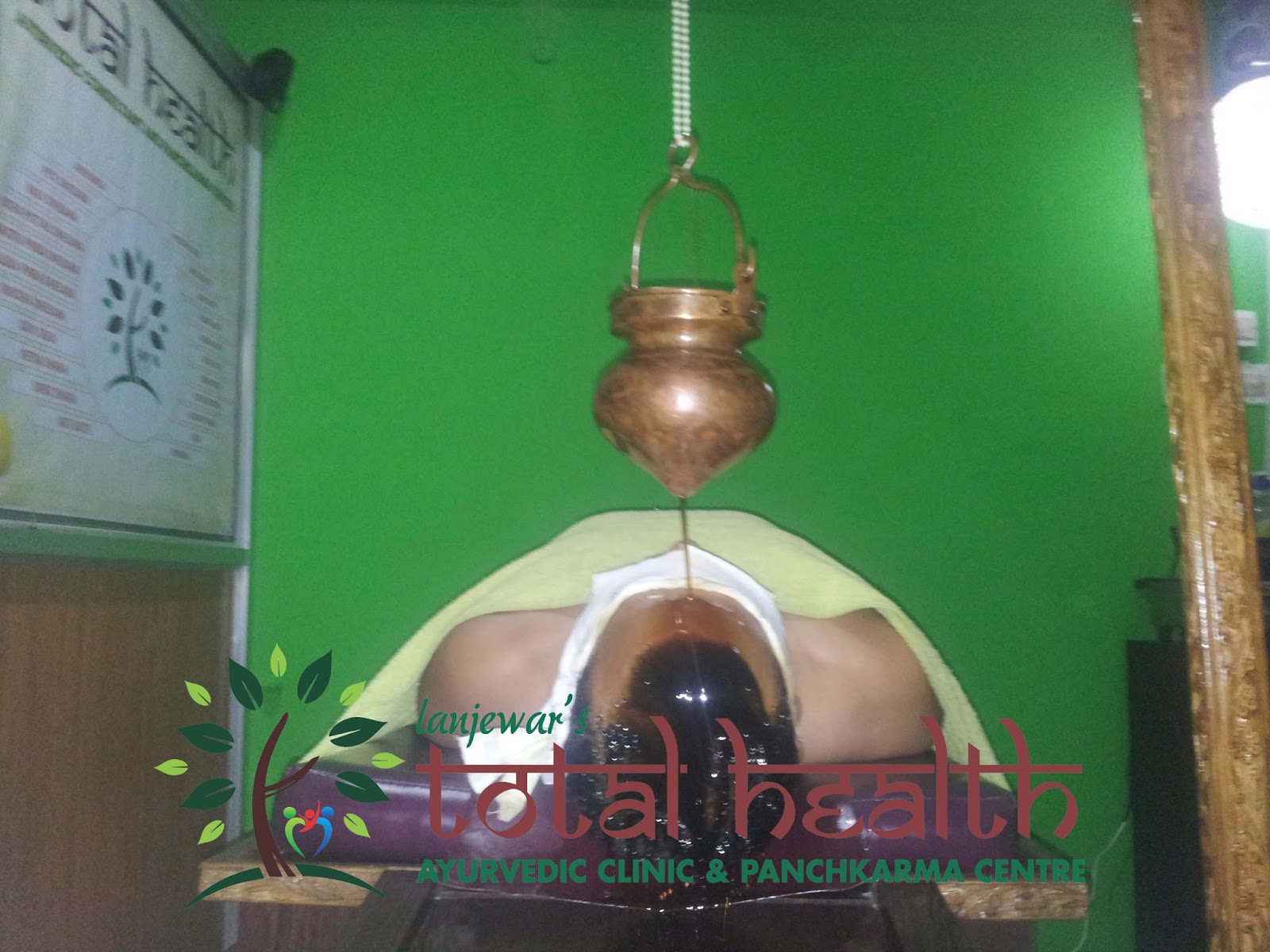
WHY SHIRODHARA?


          Consider the human body as an inverted tree. The roots are at the top and the branches point downwards. The head of the human body will be the root of this tree. The central portion of the body made up of the thorax and abdomen will be the trunk of this tree and the limbs, both upper and lower, will be the branches of this tree.
         Just like the roots nurture and control all the activities and well being of the tree, the head is the operational center of the entire body. It controls the function of the brain and spinal cord. It has many marmas or vital points and is the house of the master endocrine gland, the pituitary. It is one of the seats of Vata dosha (Prana Vata in particular) and also houses subtypes of Kapha dosha (tarpak kapha) and Pitta dosha (sadhak pitta).
         Note: The seat of sadhak Pitta, a subtype of Pitta dosha, is considered Hridaya which translated to English is ‘heart’. But in Ayurveda, Hidaya encompasses both heart and brain. So the head, which houses the brain, also becomes a seat of sadhak Pitta.
         Through the respective nerve centers in the brain, the head also controls the sense of hearing, smell, taste and sight.
         So as the three dosha are represented in the head region, any vitiation in the dosha can cause respective disorders with widespread repercussions in the whole body. Here shirodhara, through use of various mediums like oils, ghee and buttermilk, pacifies these dosha and works on the entire body indirectly.
         Shirodhara will make the head region strong so that the entire body works smoothly.

Sunday, 14 January 2018

Beat The Bloat And Water Retention:


Carrying around excess water in your body can leave you feeling unpleasantly bloated and shabby. Whether you’re looking for an overnight 24-hour quick-fix or have a few days or a week to lose that water weight, there are ways to do it without much fuss. Most of them involve dietary changes and tweaks that are easy to incorporate and should start showing results soon.

Water Retention Or Edema Causes Heaviness And Makes Clothes Feel Tight.

Edema or water retention can cause swelling in various parts of the body as a result of excess fluid in your body tissues. You’ll also feel a heaviness or fullness in the legs and arms. The water weight can make your clothes or jewellery feel too tight and cause discomfort. Even your skin might begin to feel tight or warm due to the swelling. It may cause some pain and a decline in the range of motion in affected joints.

Not sure if the swelling is due to water weight? Just press firmly on a swollen body part – if it leaves a dent where you pressed it is likely to be due to an edema.

This water retention can be the result of a range of problems that include heart, liver, or vascular/circulatory problems. Women may see fluid retention around the time of their monthly menstrual period or when they are pregnant. But it can also happen when you sit or stand for great lengths of time without moving much. You might notice this happening to you after a long haul flight or after a long day’s work where you’ve been sitting or standing all day.

Use These Tips But Also Investigate Underlying Cause:

1. Cut Down Sodium Intake To Shed Excess Water

Most modern diets have a lot of sodium intake – far more than is needed. You’ll find sodium in packaged soups, canned food, frozen meals, condiments like sauces, pickles, and seasonings. Plus, of course, in more obviously salty foods like packaged potato chips and fast food. Unfortunately, having very high levels of sodium in the body causes your body to retain more water to compensate and keep the balance of water to electrolytes. This causes your blood pressure to rise and raises the risk of stroke and heart disease.

The simplest way to drop water weight? Simply cut out these kinds of high-sodium foods from your diet and monitor your intake even in your fresh cooked meals.

2. Get Adequate Magnesium To Prevent PMS-Related Water Weight Gain

Magnesium is another mineral that needs to be present in the body in the right amounts to ensure the optimal balance of electrolytes and fluid. Magnesium is especially relevant in the context of water weight for women. That’s because it has a pivotal role during the woman’s menstrual cycle in warding off classic premenstrual syndrome symptoms (PMS) like mood swings and fluid retention.

Consume magnesium-rich foods like almonds, spinach, black beans, edamame, avocado, or yogurt for water weight loss results.

3.Increase Potassium Intake To Moderate Sodium Levels

Potassium too can restore the balance of electrolytes in the body, especially from high sodium intake. If you have a potassium restricted diet, it will cause your body to compensate by conserving sodium. As the body holds on to more sodium, it will also need to retain more water to keep the body fluid concentration right. And that translates to increased water weight.

If you want to lose this water weight, ensure you are having potassium enough to compensate for your sodium intake. The increased potassium can increase your urine production, helping you lose that excess water weight. Intake of potassium can be obtained through foods like spinach, broccoli, baked potato with the skin on, bananas, tomatoes, and quinoa.

4. Cut Down Carbohydrates To Reduce Glycogen And Insulin Linked Water Weight

Carbohydrates are probably already on the chopping block if you’re trying to knock off excess weight. But did you know that your carbohydrate intake could also be causing you to hold more water in the body? Carbs are usually stored in your liver and muscles as glycogen and this has a tendency to pull water.

In addition, carbohydrates, especially refined ones, cause insulin levels in the body to rise. Insulin causes a rise in sodium levels, which in turn leads to re-absorption of water by your kidneys – and that dreaded water weight or bloat.

5. Get Adequate Protein To Prevent Fluid Accumulation In Tissues

A protein deficiency too could contribute to water accumulation in the body. Serum albumin, a type of protein found in your blood maintains a form of pressure (oncotic) that causes water to be drawn into the blood. In doing so, it prevents excess water from accumulating in your tissues.
According to the Academy of Nutrition and Dietetics, you should get 0.8 grams of protein per kilogram of your body weight every day.

6. Get Moving And Exercise To Sweat Out The Water

Sitting still for lengths of time or even standing without moving much for long hours can cause you to develop edema or swelling as fluid pools in your body’s extremities, especially the ankles and feet. Physical activity plays an important role when it comes to losing this kind of water weight. By getting up and moving, you boost your circulation and sweat out some of that extra water from your body.

7. Have Ayurvedic Remedies To Balance Water Weight Issues

Ayurveda views edema as a problem that can afflict all the three body doshas or types. Herbal remedies recommended for treating this water retention are:

  • Gokshura or Tribulus terrestris
  • Ashwagandha or Withania somnifera
  • Punarnavasava

The use of dandelion, coriander, and sarsaparilla is suggested as well. It is also recommended that you avoid dry foods like corn as well as sodas, salt/salty foods, high sugar foods, and high sodium foods.

8. Practice Yoga To Reduce Fluid Retention And Lose Weight

Yoga is a great way to get fit, tone up your body, and even lose weight. But it can also help with water weight by easing edema or fluid retention. Here are asanas you should focus on to do this:


  • Shirshasana or headstand doesn’t just reduce edema, but also boosts your circulation in general, which can then ease swelling.
  • Surya  namaskar or sun salutation can help reduce swelling, pooling of blood, and edema or fluid retention.
  • Supta  virasana or reclining hero pose can reduce your tendency to develop excessive water retention.
  • Viparita karani or legs-up-the-wall pose is a mild inversion that can help keep your lymph moving and ease fluid retention or swelling.
9. Have Elachi (Cardamom) To Purge Excess Water

Cardamom is a natural diuretic that ayurveda has employed as a digestive aid and natural diuretic for centuries. Animal studies have found its effectiveness comparable to commercial manufactured diuretic medication. Exact dosage and the form in which you consume it will depend on your age, health, weight, and other factors and will need to be suggested by a Ayurvedic Viadya. The powdered seed will need to be taken with a juice or in blends with other medicinal herbs.

10. Try Natural Diuretic Methi (Fenugreek Seeds) For Improved Spleen Function:

Another spice cupboard remedy, exotic fenugreek seeds are also useful for losing water weight besides helping digestion. The seeds help stimulate spleen and liver function, preventing water retention. Like cardamom, it is also a natural diuretic. Soak about a tablespoon of fenugreek seeds in a cup of water for a couple of hours and have this once or twice a day. You can also add fenugreek seed powder to your cooking.

Seek the guidance of your own doctor to see if this will work for you.

Friday, 8 December 2017


The number of patients came to clinic with complaints of joints pain .some have knee pain, some have wrist pain. There are two types of arthritis.
Dhatukshayjanya vata commonly called as sandhivata or osteoarthritis.
Margavarodhjanya vata which was commonly known as Amavat or rheumatic arthritis.
Sandhivata- Sandhi means joint & vata means vata dosha . Aggravation of vata dosha in sandhi means joints responsible for a disease known as sandhivata. Mainly vata dosha is responsible for sandhiwata. Joint is made up of multiple things- like bones, cartilage, synovial fluid, tendons & muscles. Cartilage is a cushion like structure between two joints & synovial fluid is a lubricating fluid between the joint .
The vata is dry in nature & destructive in nature. It goes into sandhisthan & causes the destruction of cartilage & surrounding structures. It also absorbs the synovial fluid between two joints causing the rubbing of two bones. As the two bones rub on each other it causes pain & destruction of cartilage leads to restriction of movements.
#Causes:-
Age factor
Obesity
Eating excessive use of joints i.e heavy workload.
Food having low nutritional value.
Injury to joints
Hereditary
Excessive exposure to cold & clammy weather.
#Symptoms :-
Pain in joints.
Restriction of movements
Swelling
Tenderness
Tingling in hands & legs
Stuffiness
Crackling sound between two joints.
Our body is same as the machine. The machine needs oveoiling for proper function time to time. Same our body also needs oil for proper functioning of joints . Degenerative occurs in body with the age. Proper supplementation was not provided by our food hence joints & related parts become unnourished, so this process of degeneration goes faster & leading to weakening of bones and joints.this condition leads to osteoporosis. Sometimes, excessive weight exerts on joints leads to degeneration of bone surface forming a structure called osteophyte which worsen the pain . The osteophytes formation at vertebral bones exerts the pressure on spinal nerve & causing back pain or lumbar pain . Hence it is must to treat the condition before worse.
Treatment for the pacification of vata dosha snehan required, hence internal & external application of oil is a must. Application of dhanvantaram tail , mahanaragana tail, reduces pain and swelling. Regular application of oil reduces stiffness of joints.
#Swedan –
Hot formention with medicated steam facilities the movements of joint . It also reduce the pain & stiffness . After swedan the cells get activated & flush the toxins away from body . The cellular metabolism improves and rejunvates the joints .
There are many types of Swedan
Nadi sweda –
when pain is limited to a part of body or single joint then it is used . It is carried out by boling of drugs like rasna , eranda, dhashmula etc.
Pinda sweda –
the bolus of churna or partra are formed & then heated over pan or dipped in boiled decoction and apply over affected part by gentle rubbing . The churna or patra used in this treatment had analgesic & anti Inflammatory properties.
#Dhara –
the medicated decoction or oil poured over the affected parts in stream along with gentle message & stroke.. This is very effective in vata , pitta & rakta dushti. It provide strength to muscles & tendons.
#Janu Basti –
medicated oil poured in pool like structure for a fixed duration of time over knee joint . It causes the oleation of knee joint . it reduce pain & swelling of knee joint.
#Pichu –
the sterile gauze is dipped in to medicated oil & kept for some period of time over affected area. This provide nourishment to bones muscles, tissue & joint . it will prevent the further degeneration of joints . it helps in healing of cartilage.
#Lepanam –
Application of medication paste over the affected joint. The paste is allowed to stay for some period of time . Hot or worm application of lepa done .The lepanam had antiiflammatory & antioanalgesic property .
Application of leech over the affected area. Leech suck the impure blood and secrets the enzymes in to the body through saliva causes reduction in pain & inflammation.
#Basti –
basti is best treatment for vata dosha. Medicated oil & medicated decoction strenghthen the joints & soft tissue, rejuvenates the tissue & eliminates the toxins from body hence healing mechanism occured faster in body .
elimaination of doshas through purgation . it pacity the pitta , kapha & vata doshas.
like abhyantar sneha pan means adminstrion of medicated ghee or oil causes internal oleation of body .
The ghee used are-
Mahatikta Ghrut
Dashmula Ghrut
Amrutadi Ghrut
Ghee or oil pacify the ruksha ( dry) & khara ( rough) guna of vata.
#Shaman chikitsa –
The medicines like kaishor guggul , yograj guggul , mahayograj guggul , dashmul kwath ,rasna saptak kwath, ammrutadi guggul, yogendraras,bruhat vatchintamani,etc used for internal use.

Tuesday, 5 December 2017

Hair Problems and Ayurveda


Hair Problems and Ayurved :

Extensive and sever hair loss, premature graying of hair, baldness, alopecia, dandruff, split ends, excessive dryness of hairs. These are the some very common complaints about the hair. In these complaints the fall of hair is seems a very simple but serious issue. In the start almost all ignore towards it but when thick hair became thin and probability of baldness seems then seriousness is noted. Even premature graying is observed a lot a days. In ayurveda hair is said to be a „mala‟ (byproduct) of “Asthi Dhatu” (Bones). It is formed as mala whensarbhaga of asthidhatu is formed. Likewise body health of hair is also dependent on the food consumed. If the food taken provides rich nourishment to “Asthi Dhatu ” and if proper care of hair is taken , then the health of hair will be good.
In today‟s hectic lifestyle, consumption of fast food, bakery products, Chinese food, salty diet, outside food is increased. That‟s why the hair problem are tremendously increase due to sour salty products , the Pitta increase which goes to the hair follicle and thinning of root of hair follicles occurs which enhances the hair fall. If the pitta is increase to a great extend then premature graying takes place and younger person looks aged. The hair fall also increase in anemia and long lasting fevers. It the food increasing kapha dosha is taken in excessive the layers of “vikrut kapha” starts to form as scalp then it get dead and we call it as Dandruff, which also leads to hair fall. When this vikrut kapha get started at the hair root then glands at the base of hair follicle stop working and spots and pitches are formed which we term as Alopecia (Chai).
The treatment is done as per the reason behind it. Just use of different oils and shampoos doesn‟t give result but in contras hair fall and graying goes on increasing.
For this purpose internal (oral) medicines are given which provide nourishments to the Asthi Dhatu, Lower the increase abnormal pitta locally. Oils are also important for the application in used of nasya instillation of medicinal nasal drop is very beneficial. It strengthens a thickness hair root. 
Generally,
shampoos should be avoided Ritha, shikekai should be used.
Hot water shouldn‟t be taken on head at the time of bath.
Junk food, sour, soda products should be avoided and
proper treatment under the guidance of expert doctor should be taken at proper time so that there will not baldness and premature graying in early age.


Thursday, 23 November 2017


Lanjewar's Total Health - Ayurveda & panchakarma Centre

Address - Plot 70/A-1, Near Krishna Public School, Nehru Nagar (W), Bhilai, Chattisgarh 490020

                                          www.lanjewarspanchakarma.in

                                          lanjewarstotalhealth@gmail.com

Tuesday, 14 November 2017


                                      Ayurveda And Vitamins
The concept of vitamins is another example of scientific reductionism. Modern science commits the mistake of characterising whole foods by the health effects of specific nutrients. This has led to the emergence of a multi-billion dollar nutrient supplement industry driven by huge profits. And nobody is really sure whether these supplements have any positive impact whatsoever on our nutritional landscape.

Ayurveda, on the other hand, is holistic and talks about totality. 

There is no mention of vitamins in Ayurveda.

Ayurvedic diet is based on the principle of six tastes. Rather than looking at nutritional labels for x amount of vitamin A and y amount of vitamin B, the six tastes naturally guide us towards proper nutrition. If our meal is composed of six tastes we will automatically get all the desired vitamins among other nutrients.

As we know A,D,E,K are fat soluble vitamins. They are not in fact soluble but a part of fat itself. So if we consume fats like dairy, nuts, meat, fish etc. we will naturally get these vitamins. All these foods are oily, sweet and hence kapha increasing. So kapha foods will give us fatty vitamins.

While bitter, astringent and sour vegetables, fruits etc. will give us the watery vitamins B and C. Similarly pungent and bitter Ayurvedic kitchen spices like turmeric, cumin help liver in better absorption of nutrients. 

Boiled and cooked green leafy vegetables as opposed to raw salads help in better absorption.

A vata type personality is naturally prone to vitamin deficiency disorders particularly fatty vitamins. In fact the concept of deficiency is a myth as body can generate what it needs provided it is given the right raw materials. So either the metabolism is deficient or the raw materials (whole food) are deficient. There can be no vitamin deficiency per se.

We try to cover up deficiencies with vitamin supplements but it puts load on our detoxifying organs – liver and kidneys. At the same time we inhibit the body’s natural ability to generate its own vitamins.

Ayurvedic herbs like triphala can be a good substitute to vitamin supplements. It helps in the absorption of vitamins from foods and also converts the inactive vitamins to active form.

The take home message is that be mindful about including all the six tastes in your meals and you can safely forget about vitamins